The fuzzy bush

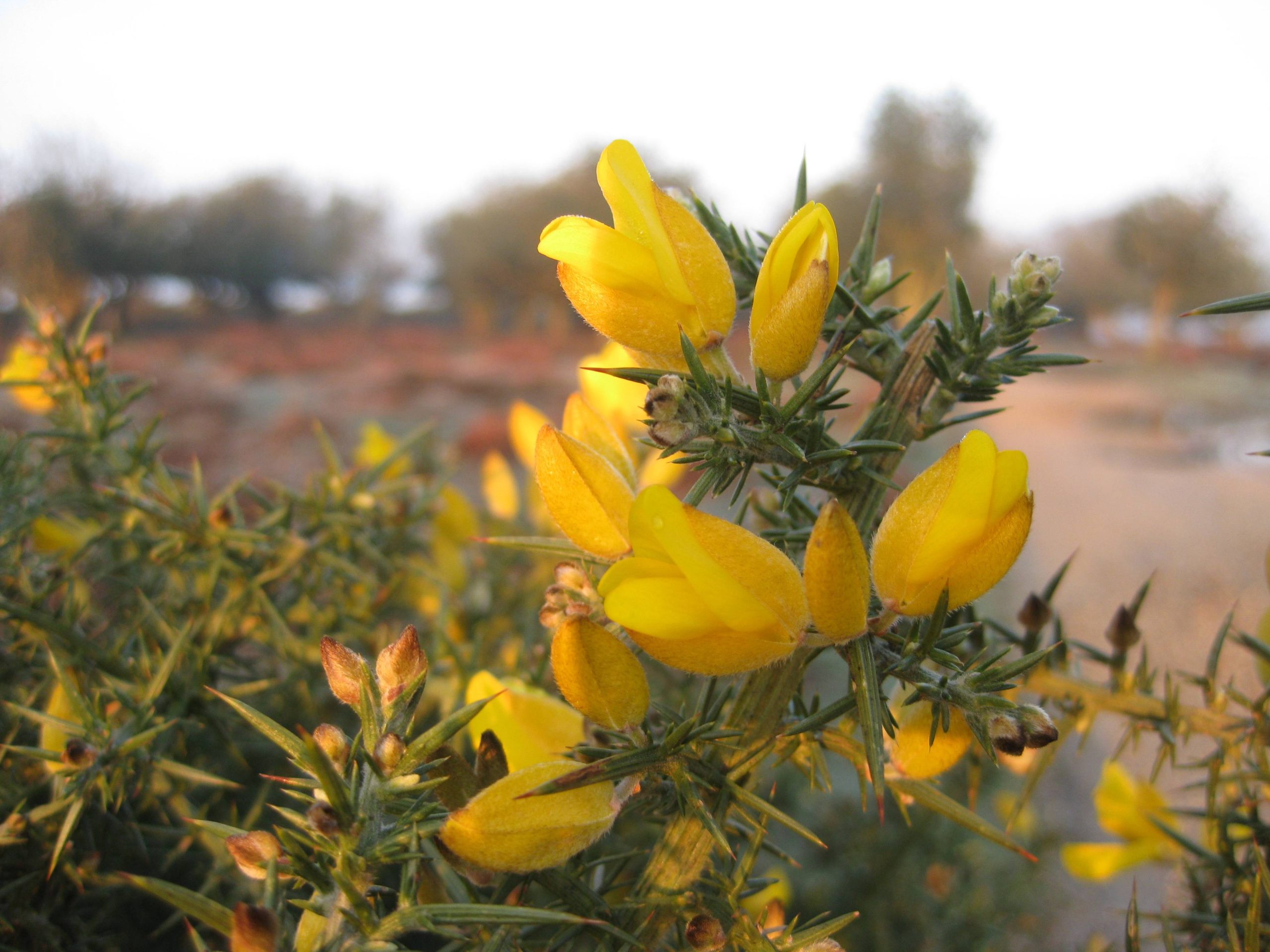
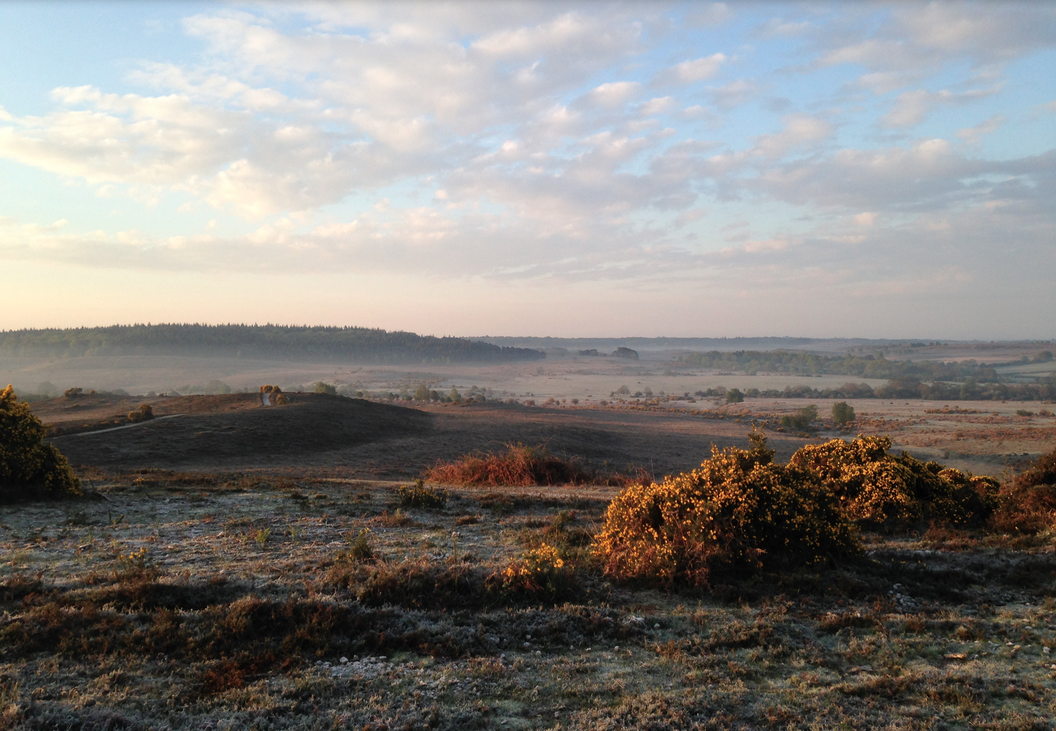
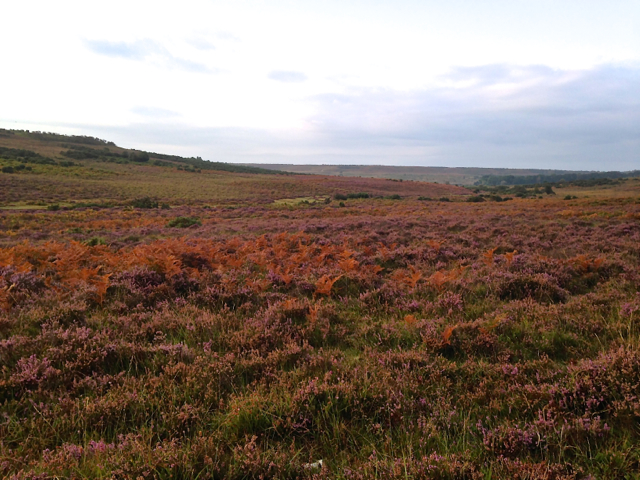
The New Forest is world renowned for its rich biodiversity and distinctive habitats. Among its most iconic plant species is one that has played a significant ecological and cultural role in the region for centuries – the gorse (known locally as a fuzz bush or furze). Ulex europaeus (common gorse) and Ulex minor (dwarf gorse) thrive in the New Forest’s heathland environment, where the plants are well adapted to the area’s nutrient-poor, acidic soils and open, sunlit conditions. This is the plant that fills the air in spring with the heady perfume of coconut!

Historical records
Historical records and pollen analyses suggest that gorse has been present in the region since prehistoric times, becoming particularly widespread as human activity shaped the landscape through grazing, burning, and woodland clearance. During the medieval period, the New Forest was carefully managed under forest law, but commoners retained certain rights, including grazing livestock. This grazing helped maintain open heathlands by preventing the encroachment of trees, indirectly encouraging the spread of gorse. Its dense, thorny growth provided shelter for animals and birds, while its bright yellow flowers, which can bloom nearly year-round, became a familiar feature of the forest’s scenery.

Gorse also held practical value for local communities. It was traditionally used as a source of fuel; when dried, it burns hot and fast, making it useful for baking bread in bread ovens. Farmers and commoners sometimes crushed gorse to create fodder for livestock, particularly in winter months when other food sources were scarce. The plant’s resilience and abundance made it a reliable, if somewhat labour-intensive, resource. In the dockyards close to the Forest, shipwrights valued gorse primarily as a readily available fuel: its dry, resinous stems burned hot and fast, ideal for heating pitch, bending timbers, and firing small forges. In some yards, it was laid beneath hulls during careening to cushion and stabilise vessels. Though not a structural material, gorse’s abundance, quick ignition, and intense heat made it a useful, everyday resource in traditional maritime industry.

Ecological role
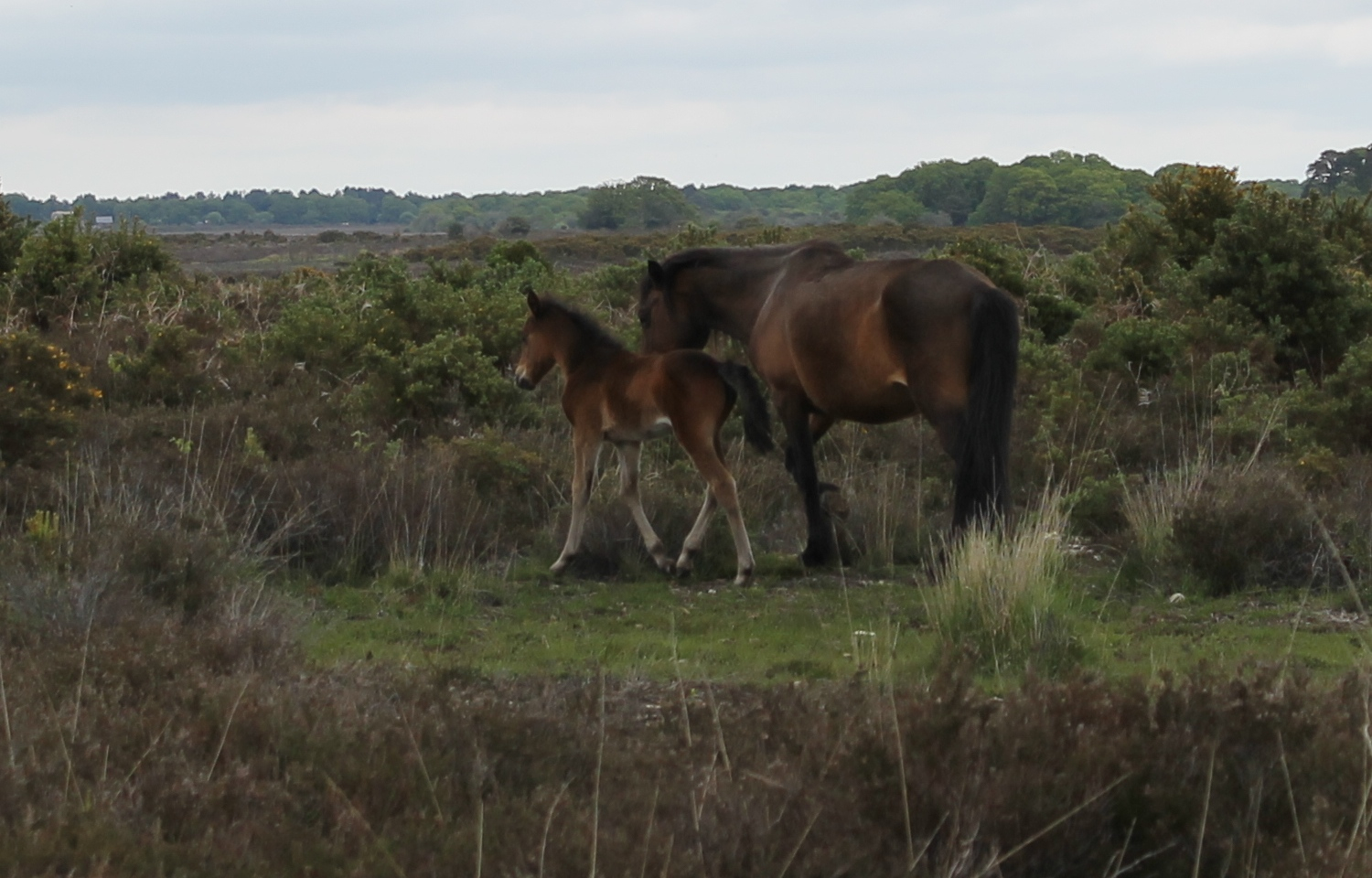
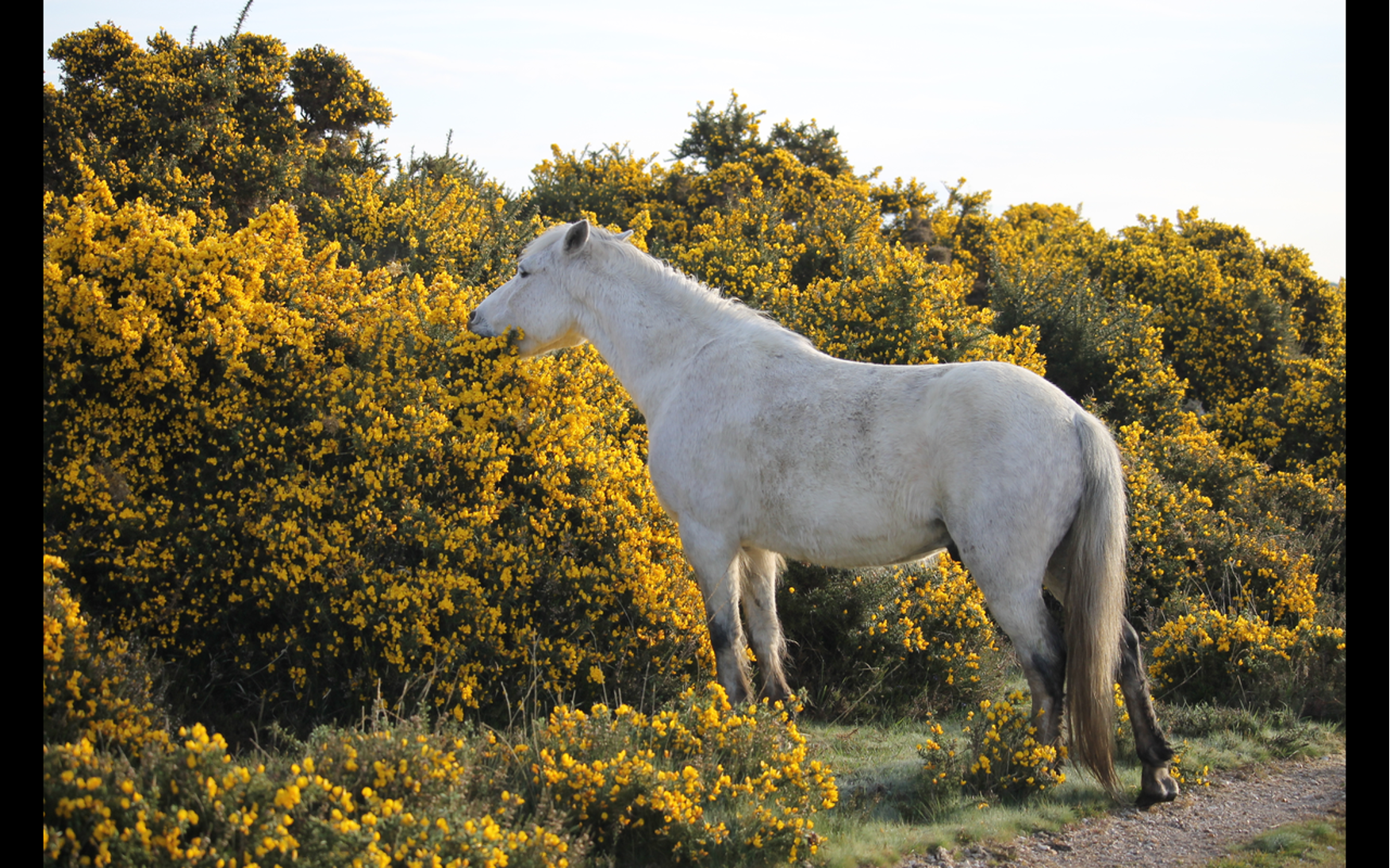
Ecologically, gorse plays a crucial role in the New Forest. As a member of the legume family (think peas or beans), it fixes nitrogen in the soil, improving fertility in otherwise poor conditions. This allows other plant species to establish and contributes to the overall diversity of heathland ecosystems. Gorse thickets provide important habitats for a variety of wildlife, including birds such as Dartford warblers and stonechats, as well as numerous insects that depend on the plant for food and shelter. New Forest ponies are famously well adapted to a tough, heathland diet that includes gorse and regularly browse on the bushes despite their dense covering of sharp spines. This might seem surprising, but the ponies have evolved both behavioural and physical adaptations that allow them to feed on such a prickly plant.

Food for ponies
Ponies typically eat the younger, softer shoots of gorse, which are less woody and slightly more palatable. Using their flexible lips and toughened mouths, they carefully select parts of the plant while avoiding the harshest thorns. Sometimes you will even see the ponies crushing stems with their hooves to make them easier to eat.nGorse is not the ponies’ preferred food; grasses and other low-growing plants are easier to digest. However, in winter or during dry periods when other forage is scarce, gorse becomes an important supplementary food source. It provides some nutrients and roughage, helping the ponies survive in an environment where food availability can fluctuate.

This relationship benefits both the ponies and the landscape. By feeding on gorse, the ponies contribute to the management of heathland habitats, supporting biodiversity and preserving the distinctive character of the New Forest. Thus, the history of gorse in the New Forest is closely intertwined with both human and animal activity, as well as natural processes. From its ancient roots to its role in contemporary conservation, gorse remains a defining feature of this unique and enduring landscape.

RECOMMENDED READING:

  • The Nature of the New Forest: Celebrating the Wildlife of a Working Common by Clive Chatters (2025): Explores the botanical richness, plants, animals, and habitats of the National Park, highlighting the influence of free-ranging livestock on the ecosystem.
  • The New Forest (Collins New Naturalist Series No. 73) by Colin R. Tubbs: A classic, comprehensive study of the flora, fauna, and ecological evolution of the area, reflecting decades of research.
  • Biodiversity in the New Forest edited by Adrian C. Newton: A scientific compilation covering various biological aspects, including a specific focus on the biodiversity of the area’s streams.
  • Grazing in Temperate Ecosystems: Large Herbivores and the Ecology of the New Forest by R.J. Putman: Examines the profound influence of large herbivores (deer, ponies, cattle) on the forest’s ecological structure.
  • Wanderers in the New Forest by Juliette de Bairacli Levy: A 1950s memoir documenting a naturalist’s intimate, wild life in the forest, foraging for herbs and fungi

Posted in New Forest, New Forest flora & fauna | Tagged , , , , , , , , , , , , | Comments Off on The fuzzy bush

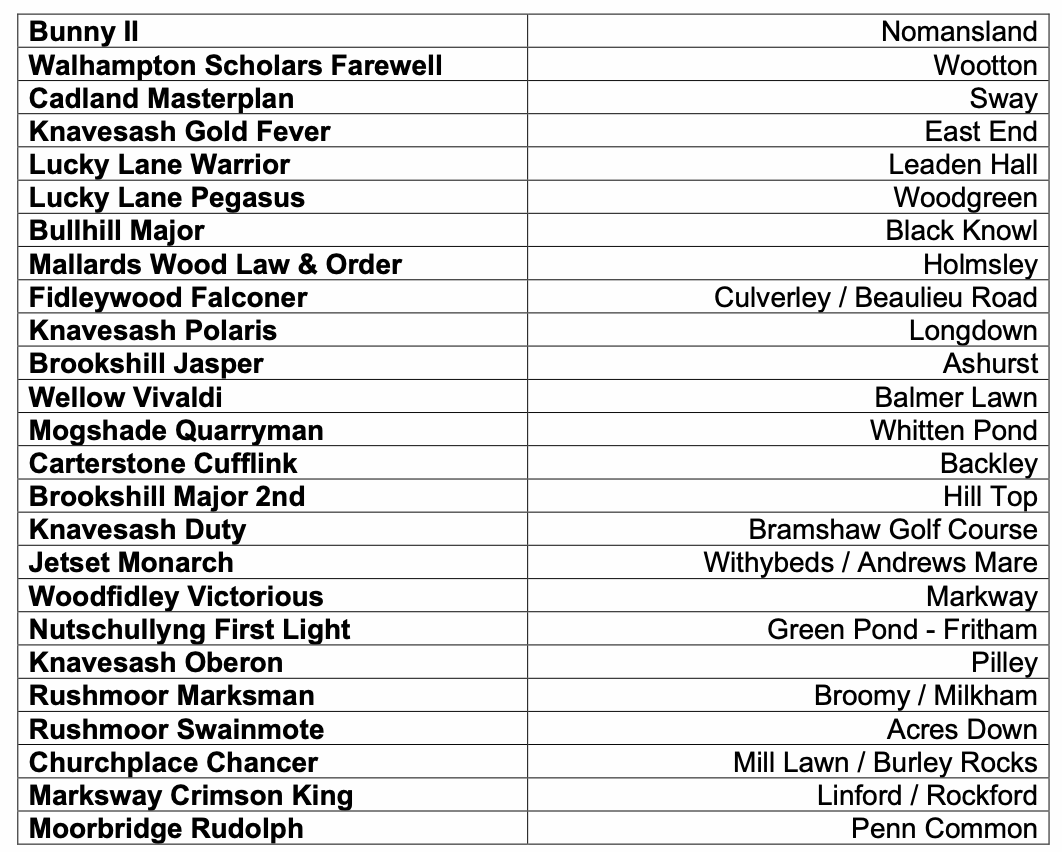
Stallion Areas 2026

Approved pedigree stallions are released into the New Forest, in selected area, to breed with the Forest mares.

Each year registered, New Forest stallions are released onto the open Forest to run with the free-roaming mares and sire the next generation of New Forest pony.

The stallions are carefully selected by the Verderer’s of the New Forest, the New Forest Pony Breeding & Cattle Society, and members of the Commoners Defence Association. Only approved stallions are permitted to breed with forest run mares and this year 25 stallions will be allowed out from Monday 11th May and will start coming in from Monday 15th June (and all in by Monday 22nd June).

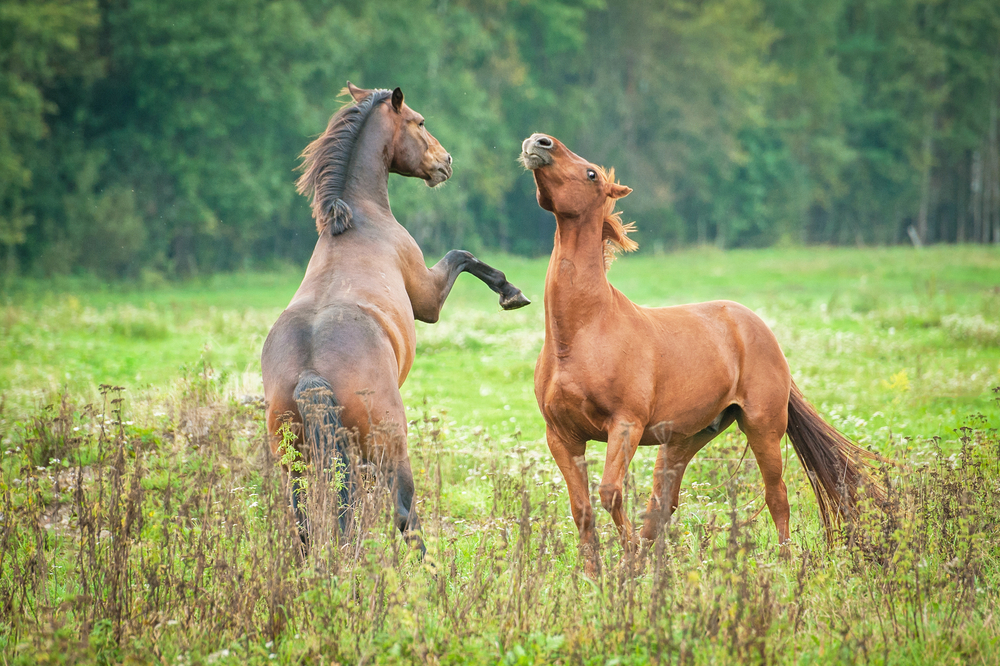
Please be aware that during the stallion season the free-roaming ponies will be preoccupied and their behaviour may be unpredictable.

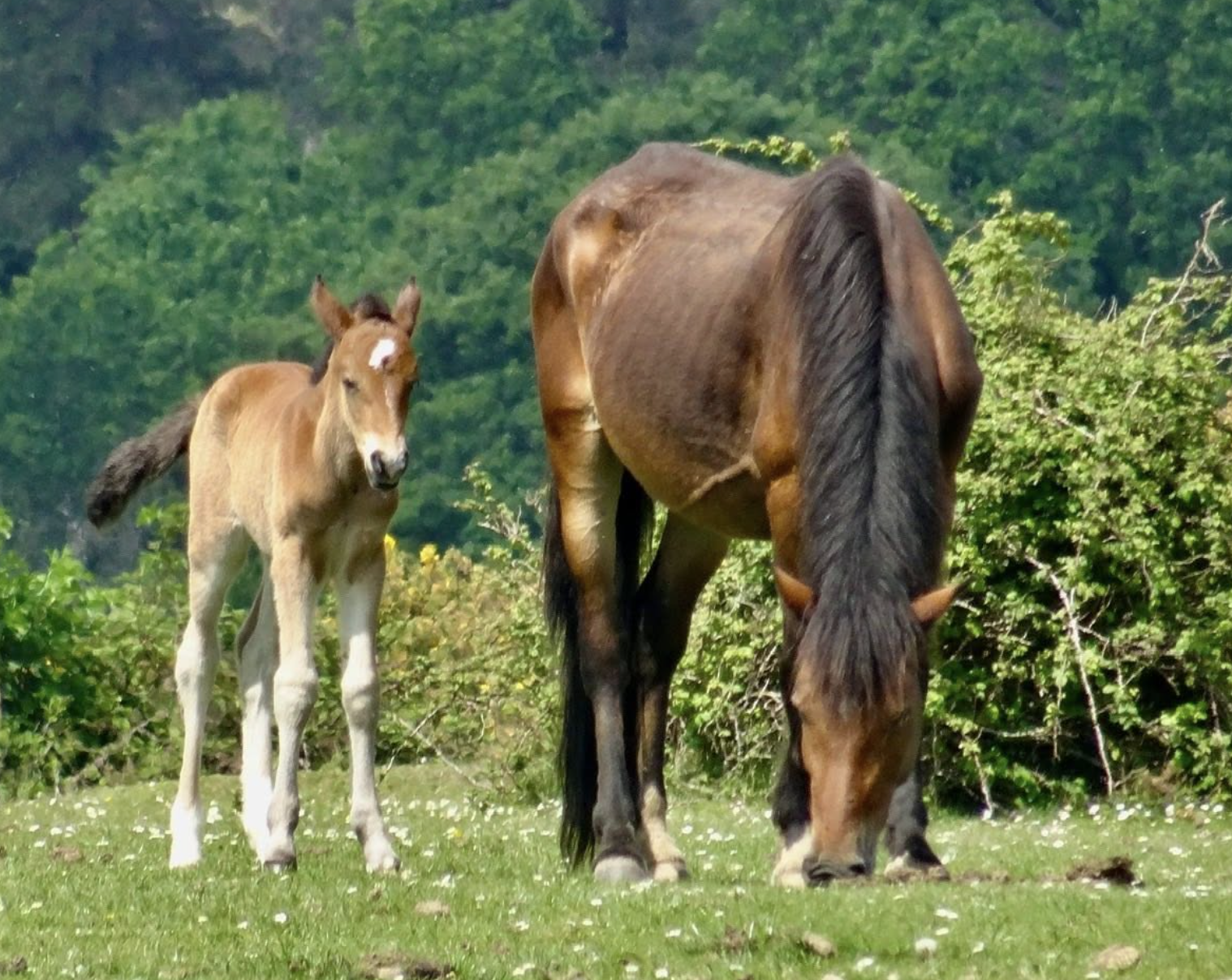
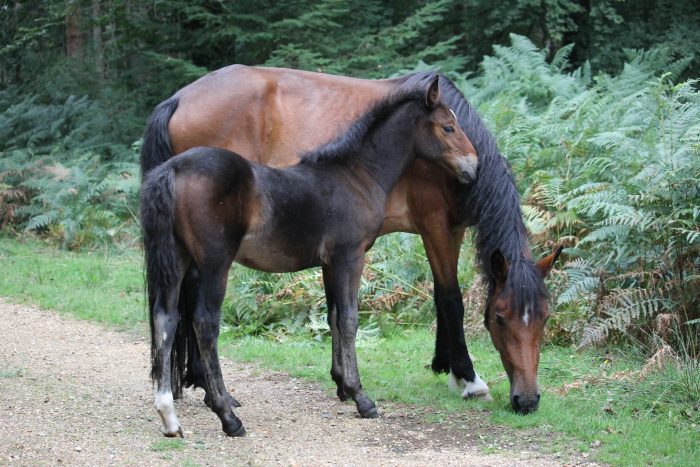
The first foals of spring are always a delight to see.

Posted in New Forest, New Forest Stallion | Tagged , , , , , , , , , , , , , , | Comments Off on Stallion Areas 2026

Being a New Forest Commoner

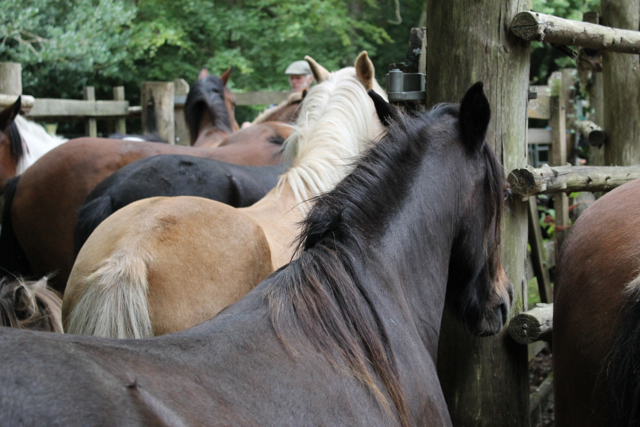
Commoning is a community activity, with everyone working together.

For me, being a New Forest commoner is an enormous privilege that has drawn me into a community of people who share a passion for the New Forest landscape, its flora, fauna and cultural heritage. A commoner is a person who occupies land or property that has Rights of Common attached to it. These rights are: Common of Pasture (grazing), which allows commoners to turn out ponies, cattle, donkeys onto the unenclosed parts of the New Forest to graze. Common of Pasture is the most practiced common right. Common of Mast (pannage) is the right to turn out pigs in the autumn, in the period known as pannage season, to feed upon the fallen acorns. This not only provides food for the pigs but because acorns can be toxic to ponies and deer when eaten in large quantities also helps other animals too. Common of Estovers (fuel-rights), is the free supply of a specified amount of wood to certain eligible Forest properties. (This right is strictly controlled by Forestry England.) Common of Marl (clay) is the right to dig clay as a fertiliser for improving agricultural land and is no longer practised in the Forest. Common of Turbary (peat), which is the right to cut peat for fuel is no longer exercised. There are a few properties on large estates, which were once part of a monastery, that also have the right to turn out sheep on the Forest but this is rarely exercised.

Time immemorial
The common rights of the New Forest are attached to property, such as a house or piece of land, and not to a person or their family. Not every property in the New Forest has common rights. Common rights have existed since time immemorial, undoubtedly predating the creation of the New Forest by King William I (the Conqueror) in circa. 1079. Indeed, some commoning families have been exercising their rights for many generations and, in some cases, can even trace their ancestry back to the earliest written records of the New Forest. Commoning in the New Forest is a pragmatic enterprise as well as a traditional one. People with rights of pasture graze their animals communally and tend to help each other to care for them and keep an eye on them (although the welfare of each animal is the responsibility of its owner). The Agisters, who are appointed by the Verderers of the New Forest*, deal with the management issues of stock on the Forest and work daily with the commoners to ensure high standards of animal welfare. The commoning calendar includes activities, such as the annual drifts or pony round-ups, shows and sales, which give this tight-knit community plenty of opportunity to get together and share the pleasures and privileges of commoning.

The Verderers of the New Forest protect and administer the interests of the commoners.

*The Verderers of the New Forest work through the Court of Verderers and have the same status as magistrates. For more information visit: http://www.verderers.org.uk

New Forest Commoners Defence Association – If you would like to contact the New Forest Commoners Defence Association please redirect your enquiry to: https://www.realnewforest.org

Posted in New Forest, New Forest Commoner | Comments Off on Being a New Forest Commoner

The ticklish impertinence of the New Forest fly

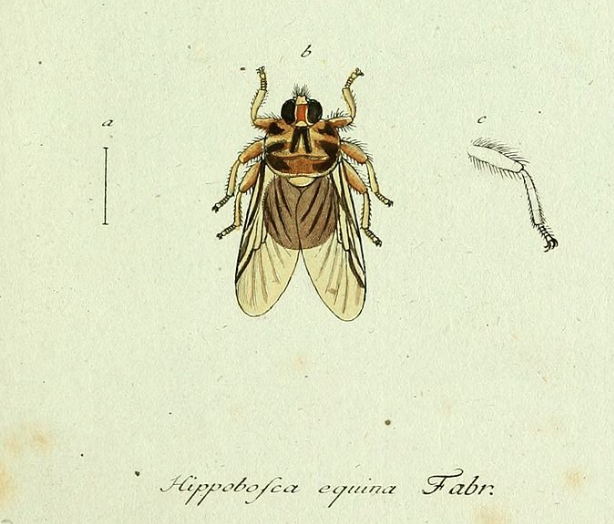
Forest fly (Hippobosca equine) aka side-fly or crab-fly a pesky resident of the New Forest.

Forest fly (Hippobosca equine) a pesky resident of the New Forest. (Image #1. Dated 1793.)

In 1895 a local newspaper published ‘Notes on Injurious Insects’.[1] Chief among these perilous mini-beasts was the forest fly (Hippobosca equina) aka horse louse fly, side-fly, or crab-fly, a bloodsucking pest that ‘causes great annoyance to the horses in the New Forest of Hampshire’.[2] In the summer months, generally between May to October, this parasitic insect preys upon the resident free-roaming New Forest ponies and any visiting horses. It has also been known to feast on Forest cattle. (I’ve even found them on my dogs, in the house. Though the dogs probably carried them in unawares.) The forest fly measures approximately 10mm in length with a wingspan of about 8mm and is variously described as reddish brown to blackish chestnut in colour, with yellow or white spots on its abdomen. Once it has found a suitable host, unless it is disturbed and flies off, or is killed, it will basically stay put for as long as it can. The forest fly is notoriously hard to squash, due to the seemingly armour plating of its body, and must be virtually eviscerated to destroy it.

The forest fly does not store the blood it sucks from its host, which means that it must feed regularly. It is the manner of the fly’s sideways movement across the animal’s body, however, that is much more upsetting to its host than its bite. These tenacious little devils cling on determinedly to their unfortunate hosts and travel, as one observer describes, by ‘making tracks under the ponies coat like a deer wandering through a field of corn’. At the end of each of its six legs are claws that resemble grappling hooks and it is with these that the fly applies a tenacious hold, as it creeps through the hairs of its unfortunate host. Its favourite place to congregate is on the horse’s perineum and additionally, if a mare, the udders or, if a gelding, on the sheath, where there are less hairs and less chance of being dislodged. As you can imagine this can cause indescribable distress and alarm to animals not habituated to such ticklish impertinences!

Stories of panic and distress
As the Victorian newspaper further reported, ‘the method of attack is really irritating to the animals, and in the cases of horses unaccustomed to it, especially, is really a source of serious danger to those in charge of the infuriated victims’.[3] Therein lies the trouble. Good-mannered horses that are otherwise sweetly behaved, trustworthy, and obedient, when at home, can suddenly turn into bucking broncos or demonic savage beasts if a forest fly lands on them when being ridden on the New Forest. I have heard tales of visiting horses being brought to the New Forest driven half mad with terror by the sensation, and normally quiet animals being rendered unrideable. Stories are even told of times past when New Forest ponies, used for transport to other areas, would inadvertently carry the flies away with them. As the flies moved onto the town animals all pandemonium would ensue, with the horses harnessed to tradesman’s vans, milk carts and drays bucking or bolting and causing widespread panic. I once, inadvertently, closed my pony inside the horsebox with a crab fly on him, after a lovely ride on the Forest. He kicked the sides of the box in violent protest as we travelled, all the way home.) The ponies born on the Forest or those turned out to roam the heaths and woods, however, become inured to the insect and generally accept their presence with resignation, if not toleration, making them the ideal mounts or driven animals for people regularly using the New Forest.

Treatments and stratagems
George Samouelle, the celebrated nineteenth century entomologist, writing about Hippobosca equina in 1819 declared, “In the New Forest of Hampshire they abound in the most astonishing degree. I have obtained from the flanks of one horse six handfuls, which consisted of upwards of 100 specimens.”[4] The good news is, however, that the forest fly is found only in the New Forest and, though it may land on you, humans are not generally on its dinner menu. (Naughty Forest boys were said to collect them to put the clinging-critters in girls’ hair as a prank.) For centuries people have been trying to find protection against this dreaded insect and there are some recommended strategies for reducing the risks of forest fly attacks on horses or ponies but none are 100% guaranteed effective. In 1844, one such treatment involved taking ‘mineral earth 8 oz., and of lard 1 lb., and make them into a salve. Some of this salve is to be spread on here and there upon the hair, and worked in with a wisp of straw. After 24 hours the salve is to be washed off with warm water, in which brown soap has been dissolved.’[5] Unfortunately, there is no follow-up to confirm the efficacy of this concoction.

Towards the end of the nineteenth century and the beginning of the twentieth century chemicals were being employed whereby….‘horses may be protected for a few hours by rubbing a paraffin rag over them, a very advisable thing to do in the New Forest, for a horse fresh in the locality when being driven, for pro tem. This undoubtedly keeps off those pertinacious and annoying Forest Flies.'[6] Modern day approaches also include the use of chemical spray repellents that are much more suitable as topical treatments; fly-rugs, and the liberal application of ointments, such as Vaseline or Sudocrem, on the areas of the horse where the flies congregate are also used. The flies are most active in the middle of the day and so early morning or early evening rides across the Forest are the best times to avoid these tenacious little critters. Combining stratagems may go some way to reducing the risk of experiencing a forest fly attack and a possible impromptu rodeo too!

A close-up of a New Forest fly showing the grappling-hook-like feet.

A close-up of a New Forest fly showing the grappling-hook-like feet.

FOOTNOTES:

[1] The Hampshire Advertiser (Southampton, England), Wednesday, May 29, 1895; pg. 4; Issue 5109. 19th Century British Library Newspapers: Part II.

[2] Ibid.

[3] Ibid.

[4] Georges Samouelle, The Entomologist’s Useful Compendium: Or, an Introduction to the Knowledge of British Insects (London, 1819), pp. 302-303

[5] Henry Stephens, The Book of the Farm, Vol. 3: Summer & Autumn, British and Irish History, 1844 (Cambridge, 2010), pp. 855-856.

[6] Frederick Vincent Theobald, Reports on Economic Zoology for the Year Ending 1902 (Kent, 1902), p. 147.

IMAGES:

#1: Forest fly (Hippobosca equina) dated 1793.

#2: Forest fly (Hippobosca equina) close-up.

Posted in New Forest, New Forest pony | Tagged , , , , , , , , , , , | Comments Off on The ticklish impertinence of the New Forest fly

The Norman Conquest and being English.

The statue of King Richard I - the Lionheart - stands outside the Houses of Parliament.

The statue of King Richard I – the Lionheart – great-great-grandson of William the Conqueror stands outside the Houses of Parliament.

If you had lived in England on this day (16 October) 958 years ago chances are you would be aware that a momentous battle had just been fought, only a few days earlier, near Hastings in Sussex. Even if you didn’t know the exact details you would undoubtedly know that the English king, Harold Godwinson, had been slain. How would this affect you? To begin with, probably not a lot. But the victor of the battle, Duke William II of Normandy, later to be known as William the Conqueror and then King William I, would fundamentally change what it was to be ‘English’ during his twenty-year reign. Even today the result of these radical changes are still in evidence but have become so familiar to us that they even form part of our national identity.

Raiders and pirates
The Normans were descended from the Norse (Norseman became Northman or Norman) who were raiders and pirates from the Scandinavian and Nordic regions. They settled in the region of France that became known as Normandy, establishing a powerful dynasty that included William the Conqueror. Prior to the Norman Conquest, if you were a man you might possibly have had a name such as Eadwine, Æthelred, or Gyrth, or if you were a woman, Ælfgifu, Ealdgyth or Cyneburh. After 1066 Anglo-Saxon names became synonymous with defeat and so children were given Norman names, such as William, Robert, and Henry or Alice, Jeanne, and Margaret, to better assimilate them into society. These names seem so familiar to us now and, somehow, more English. From the time of the Conquest Norman-French began to influence the English language, customs and culture in a way that has stayed with us ever since.

Nova Foresta
William I also imported his passion for hunting, for which he created the Nova Foresta in 1079. To protect the beasts of the chase and their habitat, he introduced Forest Law and with it an administrative and legal system that can still be witnessed in the New Forest today, in the form of the Verderers’ Court at Lyndhurst. ‘Verderer’ is derived from the French word for ‘green’ and signifies the area of responsibility for these powerful Forest officials. The first mention in written record of the New Forest occurs in the Domesday Book (Great Survey), to which a whole section is devoted. No other area of the country has this privilege. The Domesday Book is our oldest public record, which was commissioned by William I to inform him of his fiscal dues, and the taxes he could expect to receive from around the country. The Domesday Book remains an effective legal proof of land ownership.

The Queen Wills It
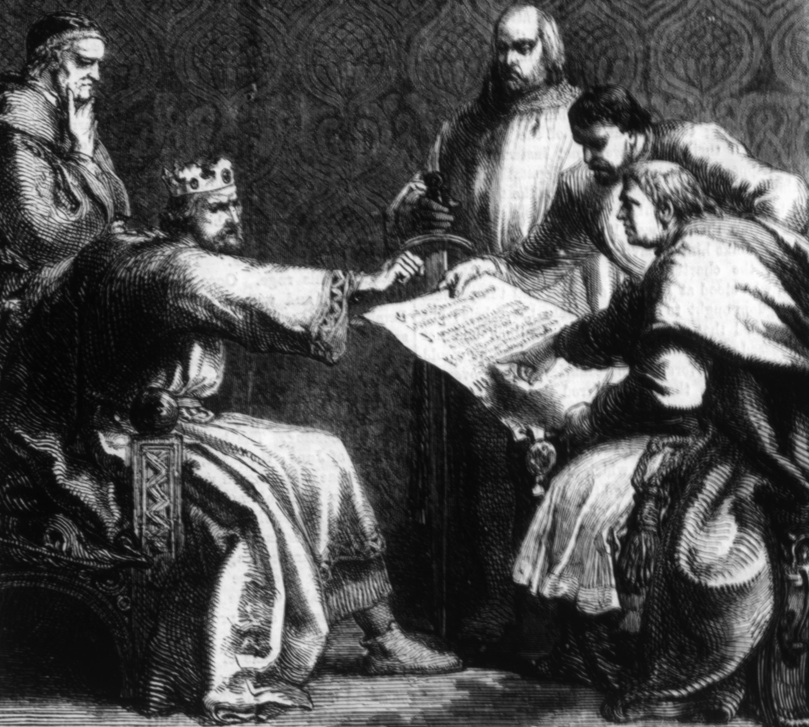
Even today Norman-French is used during the passage of Government Acts through the Houses of Parliament with phrases such as, “La Reyne le vault” (The Queen wills it.). This is because William I, and his royal descendants, bestowed and upheld the basis of English law and the institutions that eventually developed into Parliament. Richard the Lionheart, whose statue is outside the Houses of Parliament, as a patriotic symbol of our nation’s virtue and virility, is the great-great-grandson of William I. He didn’t even speak a word of English. His brother, John, is regarded as the worst king of England (even worse than Rufus the Red, and that’s saying something) but through his negligence and mismanagement Magna Carta Libertatum – better known as Magna Carta – was born (in 1215). For the first time in history an English monarch agreed in writing to safeguard the rights, privileges and liberties of certain of his subjects, such as clergymen and nobles. This legal document has inspired other forms of contract between rulers and citizenry, such as the United States Constitution, and has consequently made British law the envy of the world.

Magna Carta to Forest Charter
In 1217, two years after Magna Carta was issued, the Carta de Foresta or Charter of the Forest became law. Whereas Magna Carta established rights for the barons, the Charter of the Forest gave real rights and freedoms to ordinary citizens. It is often known as the ‘Commoners Charter’ because it relaxed some of the extremes of Forest Law, such as the death penalty or mutilation for killing a deer and made provision for the economic protection of free men, who depended upon the Forest to graze their stock and utilise many of its natural resources. The Charter of the Forest codified local law and customs, which was much more practical to ordinary people. Because of this the Commoners Charter was in use for over 800 years. In fact, the last vestiges of the Charter were repealed only in 1971 by the ‘Wild Creatures and Forest Laws Act’. Section 1(1) abolished ‘(a) any prerogative right of Her Majesty to wild creatures (except royal fish and swans), together with any prerogative right to set aside land or water for the breeding, support or taking of wild creatures; and (b) any franchises of forest, free chase, park or free warren. Thus, it was not until the twentieth century that William I’s medieval forest law was effectively ended.

The bad rule of William Rufus led to the Coronation Charter in 1100 and ultimately in Magna Carta.

Magna Carta Libertatum – for the first time in history an English monarch agreed in writing to safeguard the rights, privileges and liberties of certain of his subjects, such as clergymen and nobles.

Posted in New Forest | Tagged , , , , , , , , , , , , , , , , , , | Comments Off on The Norman Conquest and being English.

New Forest: forest laws, punishment and reform

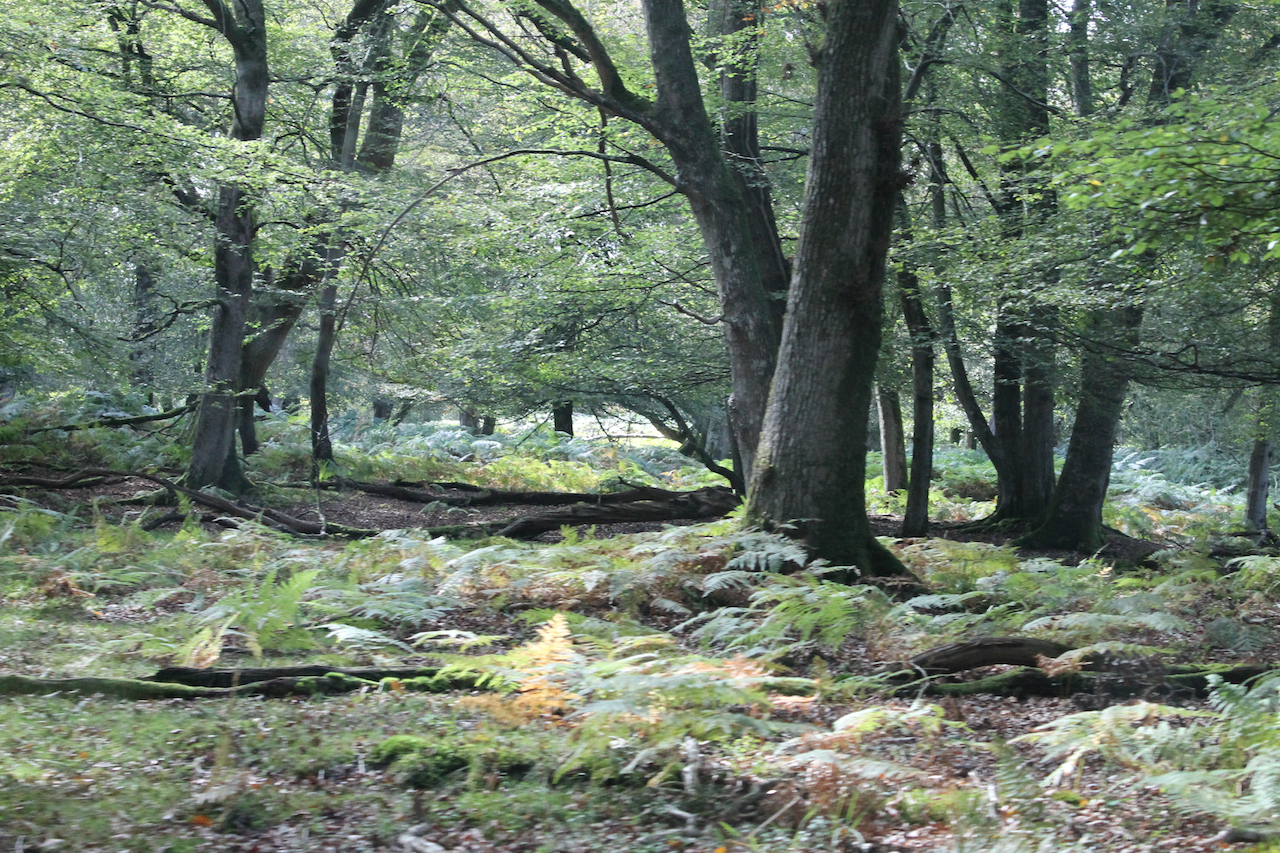
The New Forest boasts what is believed to be the highest concentration of ancient trees in Western Europe.

A ‘forest’ was formerly associated with an area where game was preserved for royal hunting, unlike today where we think of a forest as being a place filled with trees.

Nowadays we think of a forest as a place covered in trees but in medieval times it was understood to be a reserve for royal hunting. A ‘forest’ could also include whole villages and other settlements, as well as vast expanses of heathland, areas of woods, bogs, and mires. Its definition was legal not ecological. Indeed, in about 1079, William the Conqueror renamed the area from Ytene (meaning ‘thorny place’ or ‘province of the Jutes’) to Nova Foresta, denoting its legal status as an elite hunting reserve – a New Forest. Such areas were already established in Normandy, where the Conqueror had been born and brought up, but were a novel concept in England. ‘Forests’ quickly became popular with the medieval monarchy and in the late 12th and early 13th centuries, at the height of this practice, one-third of all the land area in southern England was designated as royal forest. (The county of Essex was, at one stage in the 12th century, wholly afforested, while Henry II, on his accession in 1154, declared all of Huntingdonshire as forest.)

As King of England, William I also introduced forest law to protect the ‘venison’ (game animals) and the ‘vert’ (the vegetation and herbage the game animals depended upon for food and shelter) in his hunting reserves. So severe was forest law that it was reported it was designed to ‘leave the English nothing but their eyes to weep with.’[1]. Whereas previously, the people living in the forests had been able to exploit the available natural resources of the landscape to supplement their livelihoods, after the introduction of forest law there were dreadful, even fatal, consequences for those living off the land. For example, disturbing a deer meant punishment that included blinding or having a hand cut off, and actually killing one, even to feed hungry children, could lead to execution. Furthermore, those resident in the New Forest were not allowed to gather wood; nor were they permitted to clear the land or erect fences even if it were on their own property.

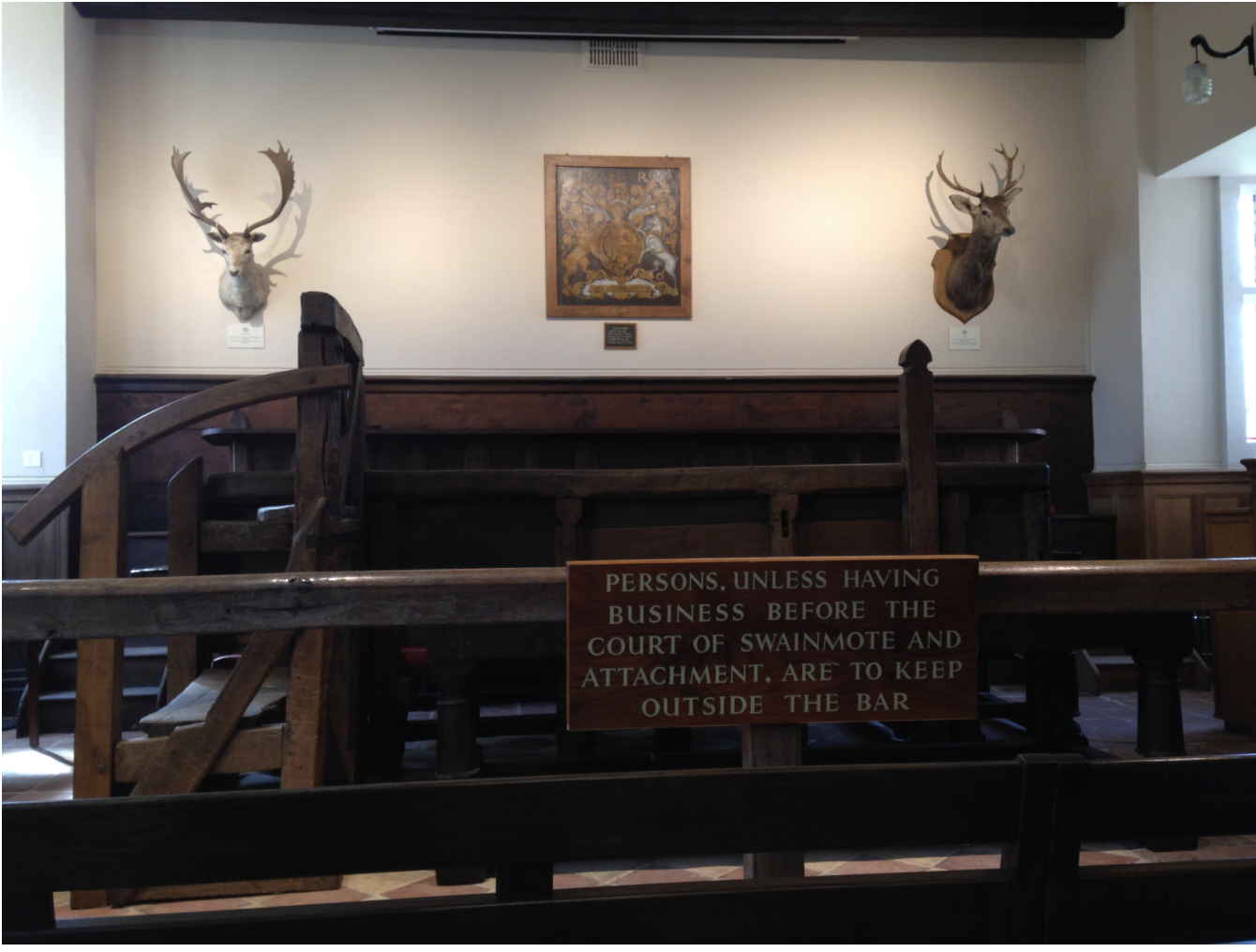
Keeping a dog could also have serious consequences, because officials believed they would be used for illegal hunting. Dogs that were unable to pass through a specially designed measuring device would have the middle two toes of their front paws amputated or ‘expedited’ to prevent them from chasing game. (Copies of the ‘Rufus Stirrup’, through which only small terrier-sized dogs could fit, can be found in the Verderers Court, Lyndhurst, and the Heritage Centre, Lyndhurst.) Forest law was harsh and proved very unpopular among the people.

The Forest judicial system 
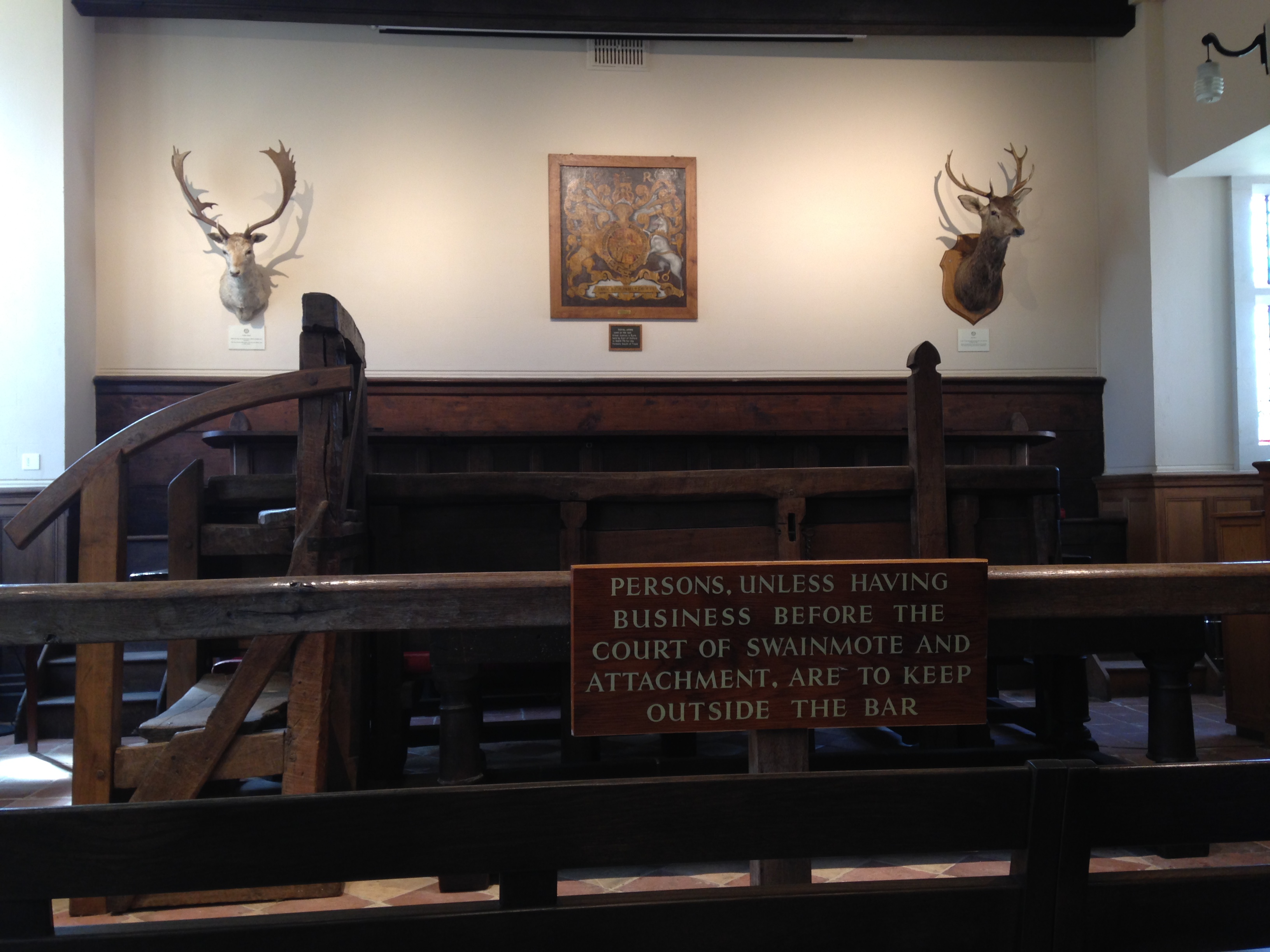
As well as introducing forest law, William I also introduced a tier of officials and courts to uphold the new legal system. Offences against forest law were divided into two categories: trespass against the venison (the game animals) and against the vert (the vegetation and herbage relied upon by the game animals). The court system was complicated and different levels of the judiciary would hear different levels of crime. The Court of Attachment, was held every forty days, and presided over by Verderers and the Lord Warden, or his deputy. The Court of Attachment did not possess the power to try or convict individuals, and such cases would have to be passed up to the more senior Swainmote Court, which could try offenders before a jury of freemen, but was held only three times a year. The highest-ranking court was the Court of Justice in Eyre. While this could pass sentence on offenders of the forest laws, it was held barely every three years or more. The whole judicial system was unsatisfactory and became subject to inefficiency, neglect, and abuse.

Stable stand Dog draw Back bear Bloody hand
Over time, the laws and legal system, introduced by William I, began to be altered in order to benefit those outside of the royal or aristocratic rankings. After concessions were granted in Henry I’s Coronation Edict of 1100; Magna Carta in 1215; and the Charter of the Forest in 1217, things even got a little bit easier for the Forest’s inhabitants. By 1217 the death penalty for poaching was abolished. Furthermore, officers of the Crown could not lawfully arrest an offender against the venison and vert unless the perpetrator was caught in either of the following situations: ‘Stable stand Dog draw Back bear Bloody hand’. Stable stand indicated that the man had been found with a long-bow or cross-bow bent at the ready or had dogs or hounds on a leash ready to let them off. Dog draw implied that the man had already wounded a deer or wild boar and had been found using a dog or hound to draw the animal or follow its scent in order to catch it. Back bear meant that the man had killed and recovered the animal and had been caught in the act of carrying it away on his back. Bloody hand literally meant being caught ‘red handed’ with the suspect’s hands covered in blood, whilst in the Forest. Any of these circumstances were enough for the suspect to be arrested and committed to prison where they would await trial.

The Verderers’ Court
By the middle of the nineteenth century it was clear that the laws, offices, and institutions of the Forest judiciary needed reform. While the current Verderers’ Court in Lyndhurst has its origins from medieval times it was reconstituted in its present form as a result of the New Forest Act 1877. The Act abolished the former oath of allegiance to the Crown and the Verderers now work in the interest of the commoners, common rights, and the New Forest landscape. The Court meets in ‘Open Court’ (usually on the third Wednesday of each month) at which the public may address the Verderers on any matter relevant to the management of the New Forest and subject to the Court Regulations. It is well worth a visit to see one of the oldest courts in the land perform its functions in managing the New Forest of today.

  1. R. J. White, A Short History of England (1967, Cambridge), p.45.
  2. Verderers of the New Forest: website

Posted in New Forest, New Forest customs | Tagged , , , , , , , , , , , , , , , , , , , , , , , , , , , , , , , | Comments Off on New Forest: forest laws, punishment and reform

New Forest Stallion Areas 2025

Approved pedigree stallions are released into the New Forest, in selected area, to breed with the Forest mares.

Each year stallions are released onto the open forest to run with the free-roaming mares and sire the next generation of New Forest pony. The stallions are carefully selected by the Verderer’s of the New Forest, the New Forest Pony Breeding & Cattle Society, and members of the Commoners Defence Association. Only approved stallions are permitted to breed with forest run mares. In 2025, the stallions go out on Monday 12th May and are to be removed from the Forest by Monday 23rd June.

The 2025 stallion areas are: Name of Stallion      –     Area

Bunny II – Nomansland Walhampton Scholars Farewell – Wooton

Cadland Masterplan – Sway

Knavesash Gold Fever – East End

Lucky Lane Warrior – Woodgreen

Lucky Lane Pegasus – Mill Lawn

Bullhill Major – Black Knowl

Mallards Wood Law & Order – Holmsley

Fideleywood Falconer – Culverley

Knaveash Polaris – Longdown

Brookshill Jasper – Ashurst

Wellow Vivaldi – Hill Top

Mogshade Quarryman – Whitten Pond

Carterstone Cufflink – Backley

Brookshill Major 2nd – Balmer Lawn

Knavesash Duty – Bramshaw Golf Course

Jetset Monarch – Wilverley

Lucky Lane Rollo – Acres Down

Nutschullying First Light – Green Pond, Fritham

Hasley Merlin – Linford

Rushmoor Marksman – Broomy

Please be aware that during the stallion season the free-roaming ponies will be preoccupied and their behaviour may be unpredictable.

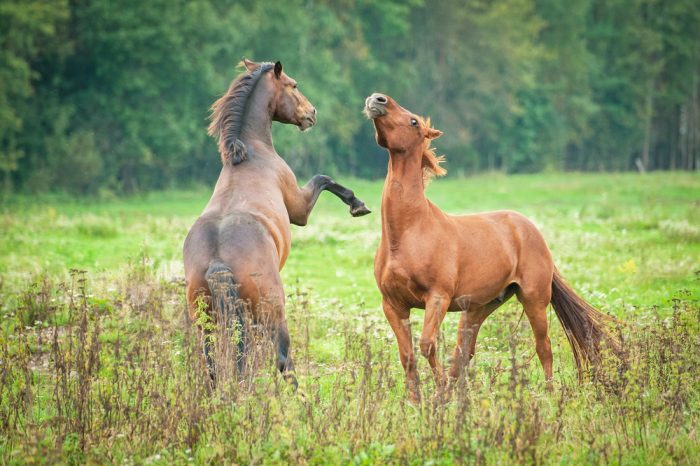
When the stallions are at large on the New Forest the wild pony herds exhibit much excitement.

Posted in New Forest, New Forest Stallion | Tagged , , , , , , , , , | Comments Off on New Forest Stallion Areas 2025

Christmas on the New Forest

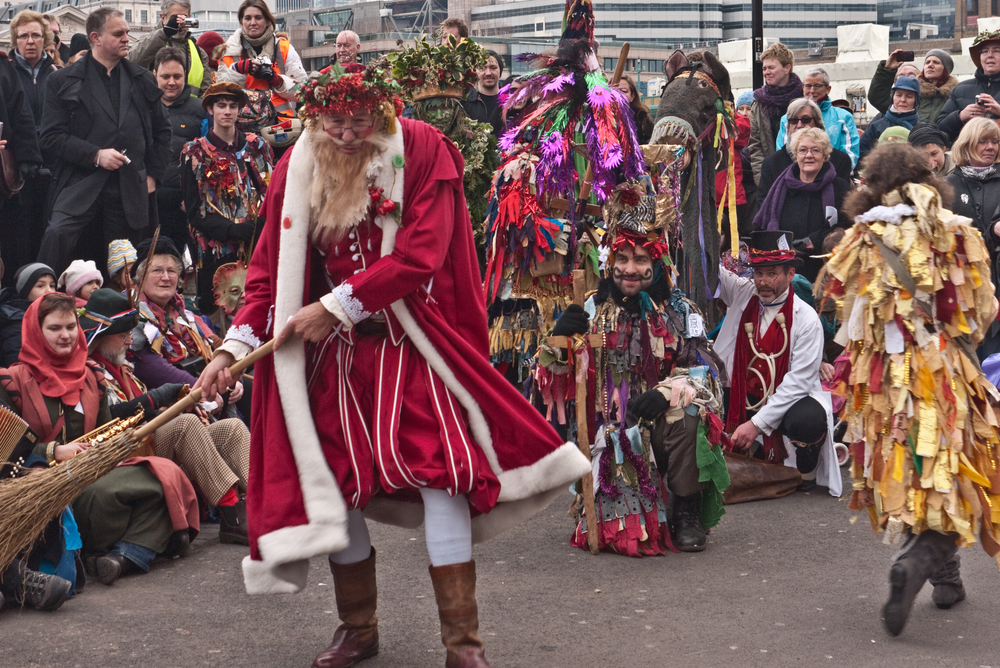
Mummers plays were traditional folk dramas performed at Christmas.

Mummers plays were traditional folk dramas performed at Christmas.

With Christmas fast approaching I have been thinking about some of the New Forest traditions and folklore connected to the festive season. The idea was sparked during a recent visit to check my stock, when I saw a man harvesting holly boughs. This winter activity, it seems, has been a legitimate part of commoning for decades and has always been a ‘ticket-of-leave affair’ regulated by the New Forest authorities. According to one Victorian account, ‘many of the butcher’s shops in London owe their brightness at the festive season to the New Forest, to the mutual advantage of butcher and forester.’1 Harvesting the evergreens was also an important source of income for the New Forest gypsies, who ‘know well to cut the best berried branches early before the birds spoil them.’2 Nowadays, of course, the importance of berries as a winter food for birds and other animals is much better understood.

Holly, along with ivy, mistletoe and yew, are the plants most associated with winter. They were used in many pagan religions, medicines and festivals. So strongly attached were they to pre-Christian culture that the symbol of the evergreen was assimilated by the Church to represent the renewal of life at Christ’s birth and make the celebration of Christmas more acceptable to the heathens. Yet, their association with the supernatural and, indeed, superstition still persisted. For centuries people believed that an oak tree (another pagan favourite) growing at Cadnam, near Lyndhurst, sprouted leaves on no other day than Christmas Day. The belief of this was so widely accepted that when a lady enquired about the tree on a visit to the area she was told ‘to come back on the Wednesday following’, which was Christmas Day. However, the lady insisted on having an investigation of the tree as she would not be returning and wanted a search made straight away. The Salisbury Journal reported that when the guide, who was there to attend her ‘was prevailed on to ascend, and on the first branch that he gathered appeared several fair new leaves, fresh sprouted from the buds, and nearly an inch and a half in length. It may be imagined, that the guide was more amazed by this premature production than the lady: for so strong was his belief in the truth of the whole tradition, that he would have pledged his life that not a leaf was to have been discovered on any part of the tree before the usual hour.’4

In 1867, John Richard de Capel Wise observed that old customs and traditions still lingered on the Forest. For instance, mummers (actors in traditional folk-plays) still performed at Christmas, and old women go out on St Thomas’s Day (21st December, the longest night of the year) to ‘go gooding’, a custom for the poor widows of the community to go round singing carols and collecting money. However, one of the most riotous activities during the festive season was the traditional red squirrel hunt, which was held the day after Christmas Day. Large groups of men and boys, armed with leaded sticks called ‘scales’, ‘squolyles’ or ‘snogs’, went out on the Forest to hunt for the squirrels (Sciurus vulgaris) which, in the 1800’s, were still in abundance. Observers felt that these excursions were an excuse to flout the absence of the game laws on Christmas/Boxing Day. Of course, the days hunting always finished in an obliging alehouse! In 1915 the Deputy Surveyor General, Gerald Lascelles, reflected, ‘Up till recent times the great congregations of squirrel hunters about Christmas time all met together in the evening, at one or other of the local public-houses, and ‘enjoyed great suppers of ” squirrel pie,” the product of the day’s amusement, but of late years squirrels have hardly been abundant enough to furnish material for these epicurean feasts.’5

In modern times, the Boxing Day point-to-point races have become the traditional post-Christmas activity in the New Forest.* Run under the original rules, which developed in the eighteenth century, riders are allowed to choose their own course across the open Forest between the start and finish point and can cross the finish line from any direction. The races are the perfect demonstration for the all-round capabilities of the pure-bred or part-bred New Forest pony – speed, stamina and sure footedness. If you look closely you may even see runner and riders with mistletoe or some other evergreen bough about their person for luck.

*Due to its increasing popularity: Restrictions have now been introduced to control the large numbers of spectators attending the point-to-point, in order to preserve the landscape and habitats of the New Forest. Please follow directions and official guidelines when attending this event. 

The New Forest point-to-point, held on Boxing Day, observes the traditional rules of racing.

  1. Rose Champion De Crespigny and Horace Gordon Hutchinson, The New Forest: Its Traditions, Inhabitants and Customs (London, 1895), p.34.
  2. …..
  3. John Wise, The New Forest – Its History and Its Scenery, p. 178.
  4. 10th January 1786, Salisbury Journal.
  5. Gerald Lascelles, Thirty-five Years in the New Forest (London, 1915) p. 244.

First published: 02 December 2018.

Posted in New Forest, New Forest pony | Tagged , , , , , , , , , , , , , , , , , , | Leave a comment

New Forest: Autumn colours signal pannage season

The colours that nature paints across the New Forest landscape in autumn are just beautiful.

The colours that nature paints across the New Forest landscape are superior to any artist.

Autumn on the New Forest is always a time of spectacle. The breaking dawn bursting upon the ancient landscape painted with reds, lilacs, browns and oranges is a visual treat guaranteed to draw wonder from those who rise early enough to witness it. The colours of the autumnal leaves as they turn to gold, copper, yellow and red are a significant tourist attraction and a warming visual treat before the cold of winter finally denudes the trees of cover. Of course, the autumn also signals important events in the commoning calendar. Apart from the annual cycle of pony round-ups, one of the most unusual sights during the autumn on the New Forest has to be that of pigs roaming loose during pannage season.

Commoners who have the right of  ‘Common of Mast’ can turn out domestic pigs to feed on beech mast, chestnuts and fallen acorns. The dates of the pannage season, when the pigs roam free, are decided by the Verderers and Forestry England but usually start when the acorns begin to drop from the oak trees and will continue for about two months. The pigs serve an important part of the ecology of the Forest and, in particular, relish the fallen acorns that when eaten in excessive amounts are poisonous to ponies and cattle. In former times the numbers of pigs foraging on the Forest during pannage would have been between 5,000-6,000 animals. Today, however, there is more likely to be up to 600 pigs roaming the Forest.

The Wessex Saddleback, which was once associated with the New Forest, is extinct in Britain as a separate breed, but if you are really lucky during pannage season you may see some of the old English breeds of pig – such as the Large White, Tamworth, Berkshire or British Saddleback. Free-ranging pigs, like the ponies, donkeys and cattle on the Forest, have right of way on the roads.

The pigs, though domesticated, are not tame and the same respect (probably more so) that you would show to any of the other free-roaming livestock should be extended to them. There are many stories and indeed videos of people being chased and even mauled by pigs roaming the New Forest but these incidents have usually occurred because of some provocation by hapless humans. Like the ponies and donkeys, it is not a good idea to feed the pigs, however willing they may be, as you’ll soon upset them when the food runs out and you try to walk away. During this time of year you may also find local shops selling pig-shaped chocolates, cakes and biscuits in celebration of this country tradition – for those who like their pigs more sweet than salt.

Pannage season is an important event in the commoning calendar and a popular tradition.

NOTE: Pannage dates: from Monday 13th September until Sunday 14th November 2021 (inclusive) pigs will be turned out to feast on the acorns and mast in the Open Forest. ? ? ? Please take extra care when driving on the #NewForest roads. #pigawareness #add3minutes #realnewforest

Posted in Pannage season | Tagged , , , , , , , , , , , , , , , | Leave a comment

New Forest Stallion Areas 2019

The New Forest stallion season lasts only a few weeks each year and is an important date in the New Forest’s commoning calendar.

Each year, licensed New Forest stallions are released onto the Open Forest to run with the free-roaming mares and sire the next generation of New Forest pony. The stallions are carefully selected by the Verderer’s of the New Forest, the Commoners’ Defence Association and the New Forest Pony Breeding & Cattle Society.

Only approved stallions are permitted to run with the mares to breed, and do so for only several weeks each year. This year the stallions are released on Monday 13th May to run until Monday 24th June 2019, inclusive.

The stallions and areas for 2019 are:

Cameron Luck of the Irish – Acres Down

Woodfidley Top Gun – Balmer Lawn

Mallards Wood Law And Order – Black Knowl

Lucky Lane Warrior – Busketts

Lucky Lane Pegasus – Beaulieu Aerodrome

Fidleywood Falconer – Leaden Hall

Sturtmoor Top Hat – Hilltop

Lovelyhill Hendrix – Linford

Rushmoor Dalesman – Longdown

Knavesash Polaris – Mill Lawn/Burley Rocks

Bunny II – Backley

Sway Scrumpy Jack – Setley

Bullhill Major – Stoney Cross

Blakeswater Quantum Solice  – Holmsley

Bakeburn Benny – Wootton

Please be aware that during the stallion season the free-roaming ponies will be preoccupied and their behaviour may be unpredictable. Take extra care when out and about in the New Forest, particularly if you are a road user.

When the stallions are at large on the New Forest the wild pony herds exhibit much excitement.

For more information about the New Forest Stallions please visit: New Forest Pony & Cattle Breeding Society.

For more information about commoning in the New Forest please visit: New Forest Commoners’ Defence Association.

Posted in New Forest Stallion, Uncategorized | Tagged , , , , , , , , | Comments Off on New Forest Stallion Areas 2019